
What lets a DTC brand scale creative on Meta?
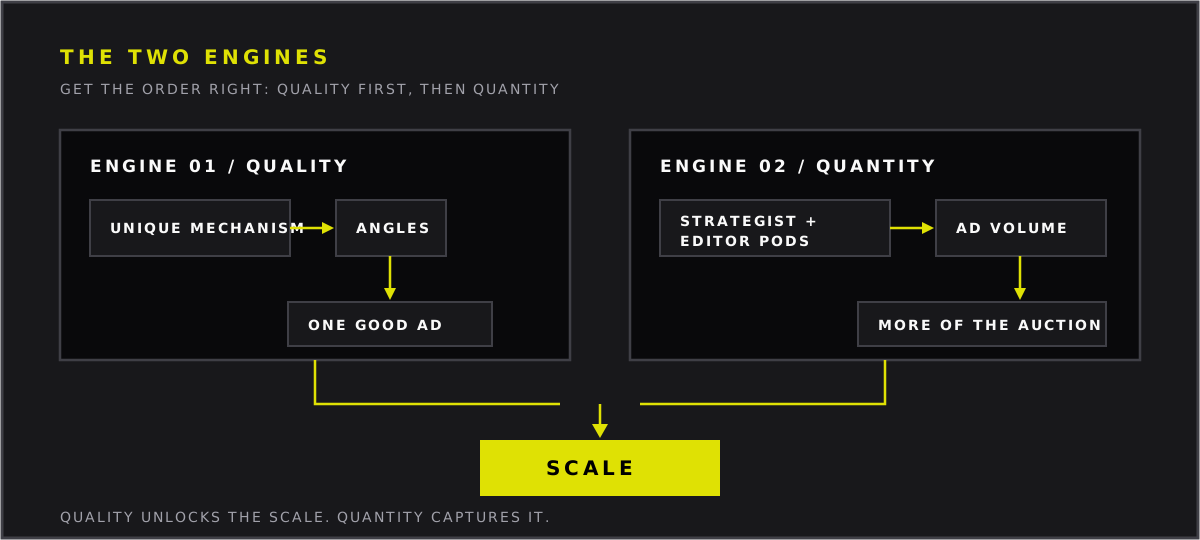
Two things, in order. First, a unique mechanism: one novel root cause that explains the customer's problem and lets a single product speak to many different audiences. Second, a creative production machine: a team structured like an in-house agency that turns that one good idea into the sheer volume of ads the platform now demands. Quality unlocks the scale; quantity captures it. Get the order wrong and you just produce more bad ads, faster.
TL;DR
- Creative, not targeting, is the constraint that decides how far you scale on Meta in 2026. The platform's models do the targeting; the creative is the input you actually control.
- The unique mechanism (the root cause of the problem) is the single most important creative decision. One strong mechanism unlocks 5 to 20 angles.
- Angles are the different audiences and problems that all trace back to that one mechanism.
- The unique selling proposition bridges the mechanism to your product, ideally with clinical substantiation so it converts and stays compliant.
- Once one good ad is repeatable, you scale volume with strategist-and-editor pods at a defined ratio, often around three editors per strategist.
- Volume wins because the brand that fills more of the auction with quality creative takes the space, and at the very top that compounds into six figures a day in spend.
Creative is the lifeline
A decade ago you scaled on Meta by being smart about audiences. That lever is gone. The platform's delivery models now find the buyer for you, which means the creative is the targeting: the angle, the hook, and the offer decide who the algorithm shows the ad to. The single highest-leverage thing a DTC brand controls is the quality and quantity of creative it puts into the auction.
That reframes how the brands that scale hardest think about their creative team. They do not treat it like an ordinary ecommerce marketing function. They run it like a creative agency that happens to have one client: themselves. At the very top of the market, a single brand might run more than 20 creative strategists and 60 editors against one product. You do not start there, and this is not a headcount you buy. It is a structure you grow into. But the philosophy applies whether you are scaling toward your first $50k a day or well past it: creative is the lifeline, so build the system that produces it on purpose.
There are two halves to that system. The first is what makes a single ad good. The second is how you turn one good ad into a thousand. Most brands skip straight to the second and wonder why volume did not save them.
The unique mechanism is the most important decision
Before angles, before formats, before a single brief, there is the unique mechanism: the root cause of all the customer's problems. It is the most important variable in the entire creative process, and most brands underweight it.
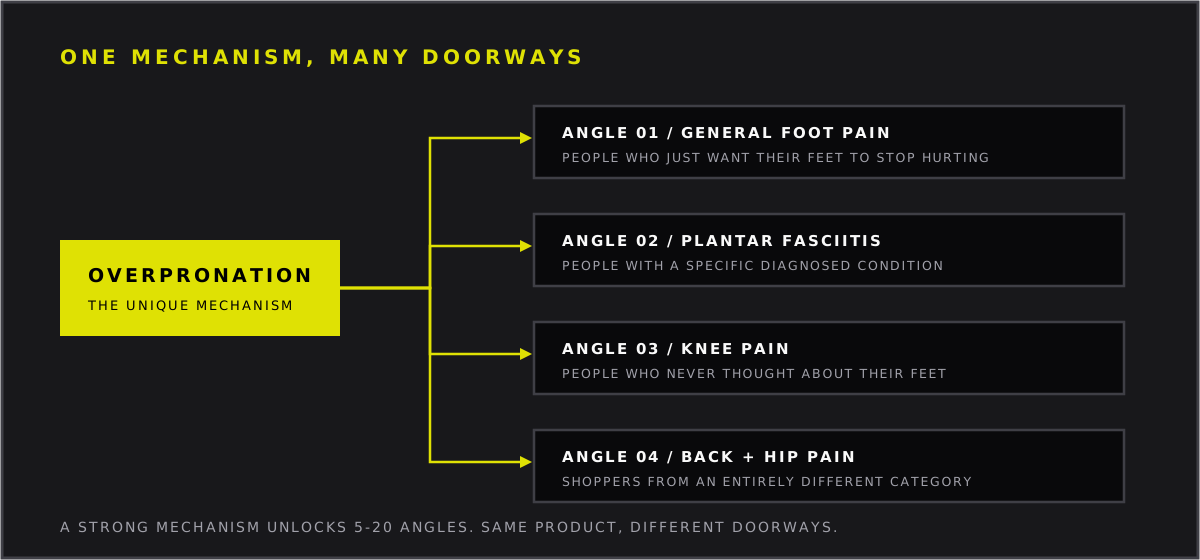
A mechanism is the named, often novel reason a problem exists. Take a foot-insole brand. The mechanism might be overpronation: the foot rolls too far inward as you walk, throwing the body out of alignment. That single root cause does not just explain one complaint. It explains many. And that is the point, because a good mechanism lets the same product speak to completely different audiences who think they have completely different problems.
| One mechanism (overpronation) | The angle it unlocks | The audience it reaches |
|---|---|---|
| The foot rolls inward and misaligns | General foot pain | People who just want their feet to stop hurting |
| Misalignment strains the heel | Plantar fasciitis | People with a specific diagnosed condition |
| Misalignment travels up the leg | Knee pain | People who never thought about their feet |
| The chain reaches the spine | Back and hip pain | People shopping in an entirely different category |
One mechanism, four (or ten, or twenty) distinct pockets of people, all reachable with the same product. This is how you unlock the broad ad spend that scaling requires: not by finding one clever audience, but by finding one root cause that legitimately connects many of them. The brands that scale the hardest have this locked down more tightly than they have any individual angle, because angles you can mix and match endlessly once the mechanism underneath them is strong.
A few rules we hold to here. You can run more than one mechanism (two or three is common at scale). The mechanism should be novel: a light-bulb moment, not the same explanation the buyer has scrolled past a hundred times. And it has to be real. A mechanism with broad reach is the difference between a product that can spend and one that stalls, which is why a root cause like cortisol shows up behind so many supplement winners: it credibly ties back to almost every angle in the category.
Angles are the audiences a mechanism unlocks
If the mechanism is the root cause, angles are the symptoms and problems people actually feel and search for. Each angle is a different doorway into the same house. The work, once the mechanism is set, becomes almost mechanical: study the brands scaling hardest in your category, catalogue the angles that are working, and test the ones that legitimately trace back to your mechanism.
Expect one strong mechanism to support somewhere between 5 and 20 angles. That ratio is why mechanisms matter more than angles. Every hour spent sharpening the mechanism pays off across every angle it unlocks, while an hour spent on a single angle pays off once. This is the same logic that sits underneath our advertorial and pre-sell work: the mechanism is the spine of the story, and the angle is just which reader you are telling it to. Whether that story should run as an advertorial or send the click straight to the product page is its own decision, and we broke it down in advertorials vs landing pages.
The unique selling proposition bridges the mechanism to your product
Once the mechanism is defined, the unique selling proposition is the easy part: it is simply how your product solves that root cause. Insoles keep the foot stable, stable feet stop overpronating, and that one fix resolves the whole downstream chain of pain. When the mechanism is right, the USP almost writes itself.
The one discipline that matters here is substantiation. The cleanest, highest-converting funnels pair the mechanism and the USP with real clinical backing, both because it makes the buyer believe and because it keeps you advertising inside platform and regulatory lines. If you are connecting a mechanism to an angle, the connection should be true and ideally evidenced. Get the mechanism, the angle, and the USP aligned with substantiation behind them, and you have the one good ad that everything else scales from.
Quality first, then quantity
This is the order most brands invert. Until you have a repeatable way to make a good ad, scaling the creative department is pouring fuel on a fire that is not lit. Quantity does not matter if the quality is not there; it just burns budget faster. So the sequence is: nail the mechanism, prove at least one angle, build the USP bridge, confirm it converts. Only then do you turn quality into a machine. One good ad becomes the template for many good ads, and the job shifts from "can we make a winner" to "how many winners can we manufacture."
The creative machine: strategist and editor pods
When you have momentum, scaling creative comes down to two roles and the ratio between them.
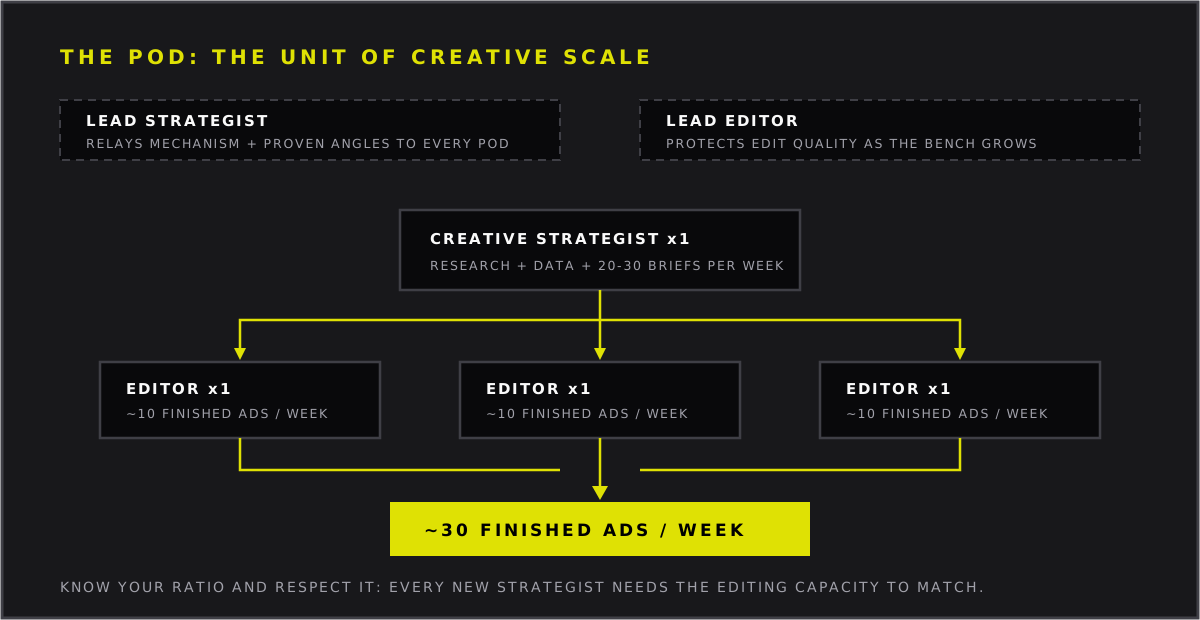
The creative strategist is the engine. They do the research, read the data, and define which angles to test next. The editor turns those briefs into finished ads. The whole system is governed by a simple production-capacity question: how many editors does it take to keep up with one strategist?
| Role | Throughput | Pod ratio |
|---|---|---|
| Creative strategist | ~20-30 briefs per week | 1 |
| Editor | ~10 finished ads per week | ~3 |
If a strategist writes 30 briefs a week and an editor finishes 10 ads a week, you need roughly three editors per strategist to avoid a backlog. That is the unit: a micro-pod of one strategist and a few editors. Your real ratio will differ (it might be 1:4, it might be closer to 1:1 if your ads are longer), and the closer you can get to 1:1 without starving production, the more efficient the pod. The point is to know your ratio and respect it: every new strategist you add needs the editing capacity to turn their ideas into ads, or the briefs just pile up.
Two leadership roles hold it together as you grow. A lead strategist steers the ship, relaying the mechanism, the proven angles, and the formats worth testing to every new strategist you bring in. A lead editor protects edit quality as the editor bench expands, usually with a project manager underneath to keep the pipeline moving. Then scaling is just a decision: five strategists or ten, knowing that ten strategists implies around thirty editors to feed them. AI production is already bending that ratio: the AI ad creative workflow covers how teams ship 50 ads a week with a smaller bench.
Why volume wins the auction
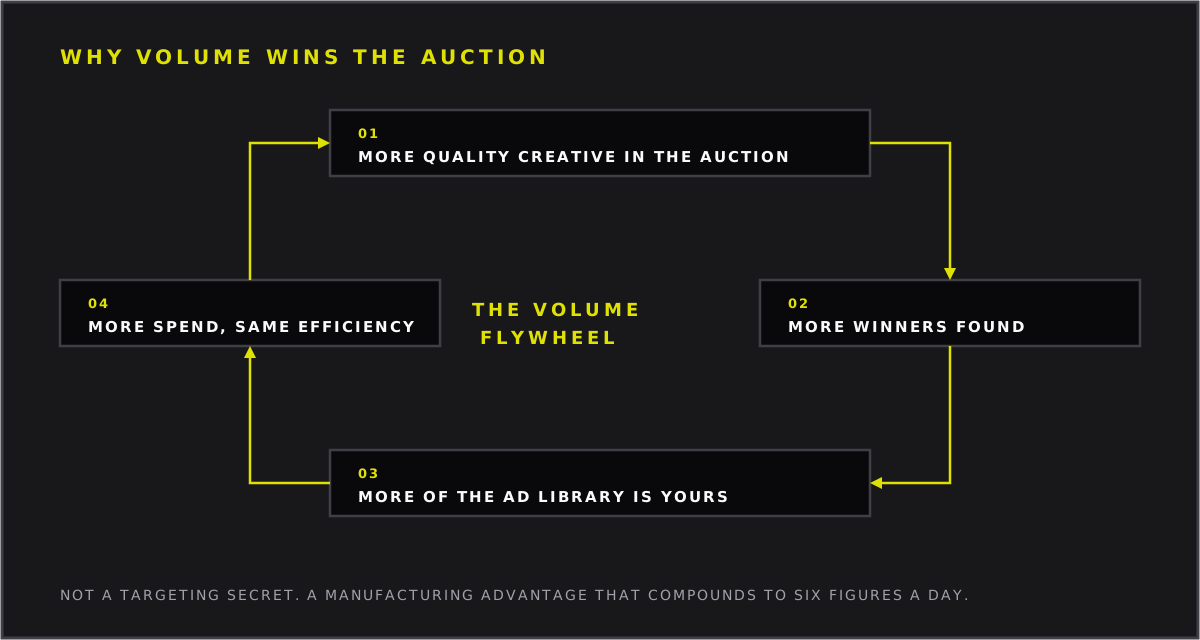
The reason all of this matters is simple: the brand that puts more quality creative into the auction takes more of it. More angles tested means more winners found; more winners means more of the Meta ad library is yours; more of the library is yours means more impressions, more spend, and more revenue at the same efficiency. That is how brands reach genuinely absurd numbers, six figures a day and beyond, entirely on paid traffic. It is not a targeting secret. It is a manufacturing advantage. Where all that volume lands matters as much as producing it: the consolidated account setup that keeps the signal in one place is in our Meta ads account structure playbook.
How we run the creative machine at EcomLabs360
This is the operating philosophy we bring to every account: creative as an operation, mechanism-first, built to produce quality at volume. We start by finding the root cause that unlocks the category, build the advertorial and creative systems that carry it across angles, and structure the production pipeline so volume never comes at the cost of quality. It is why our supplements and beauty playbooks lead with the unique mechanism: get that one decision right, and everything downstream, the angles, the ads, the scale, gets easier.